Forging Lubricants: Graphite, Graphite-Free, Dry And The Coil Sealant
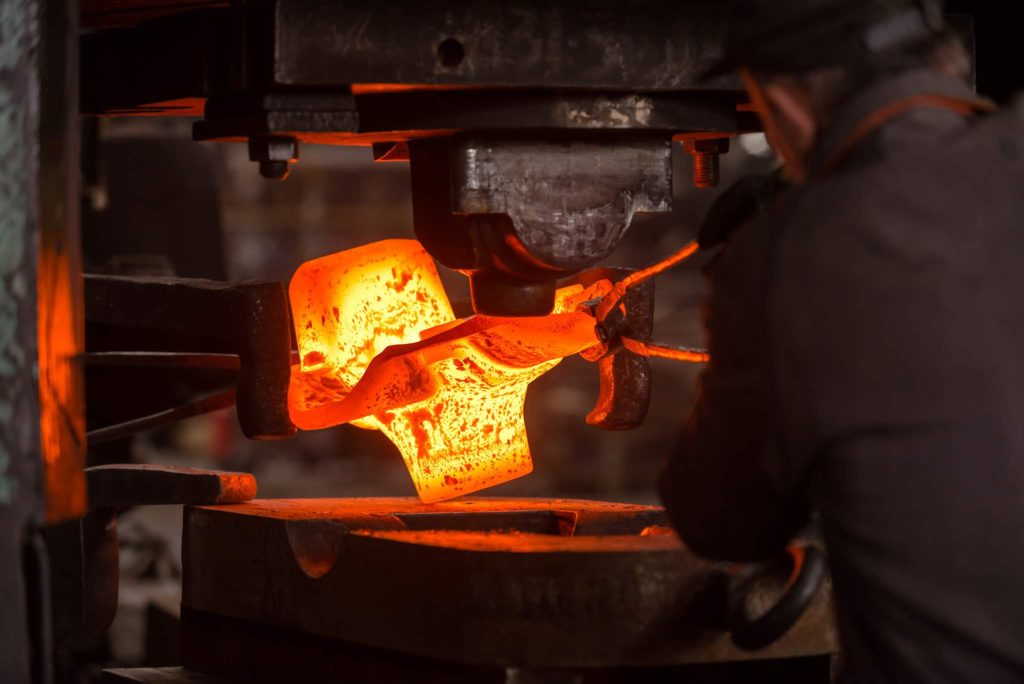
A forging die lubricant has to wet a hot die, film evenly, release the forging and survive the next blow, shift after shift, without smoking out the shop. Pyroflux India makes the Forgecoat range in Noida for exactly that: Forgecoat 100G, a smokeless, ammonia-free water-based graphite lubricant for a wide range of forged parts and die temperatures up to 1000 °C; Forgecoat 100S, a graphite-free water-based lubricant for warm and hot forging of ferrous metals where a black film is not acceptable; and Forgecoat D, a dry lubricant for cold forging applied with a dry spray gun or blower. SupraForge, an induction-coil sealant good to 1250 °C, protects the coils that heat the stock. Both liquid grades dilute 1:8 to 1:12 with water and spray onto dies at or above the film-forming temperature given on the data sheet.
The Forgecoat Grades
| Grade | Type | Die temperature | Dilution | Notes |
|---|---|---|---|---|
| Forgecoat 100G | Water-based graphite | Spray onto dies at 93 °C minimum, up to 1000 °C | 1:8 to 1:12 | Smokeless, ammonia-free; wets hot dies, coats uniformly, excellent release, extends die life; wide range of forged products |
| Forgecoat 100S | Water-based, graphite-free | Spray onto dies at 125 °C minimum, up to 700 °C | 1:8 to 1:12 | Warm and hot forging of ferrous metals; clean, light-coloured film |
| Forgecoat D | Dry lubricant | Cold forging | None; dry spray gun or blower | Prevents sticking, excellent release, extends die life |
| SupraForge | Induction coil sealant | Up to 1250 °C | Applied directly to the coil | Seals and protects coils; extends coil life, prevents corrosion and build-up |
Choosing Between 100G And 100S
| Forgecoat 100G (graphite) | Forgecoat 100S (graphite-free) | |
|---|---|---|
| Film | Black graphite film | Light-coloured film |
| Die temperature | Up to 1000 °C | Up to 700 °C |
| Release | Excellent on deep, complex cavities | Excellent on warm and moderate hot forging |
| Housekeeping | Graphite dust and black residue to manage | Cleaner shop, no black marks on forgings |
| Choose it for | Steel hot forging, deep cavities, heavy parts | Parts that must stay clean, warm forging, lines where graphite contamination is a problem |
For aluminium and brass hot forging, and for any forging where a carbon film would contaminate the part, a boron nitride suspension or BN stick gives a white, non-wetting film to about 900 °C; see the BN vs graphite guide.
Film Formation Is Everything
- Dilute 1:8 to 1:12 with water depending on cavity depth and die temperature; deeper cavities and hotter dies take the richer end.
- Spray onto dies that are at or above the film-forming temperature (93 °C for 100G, 125 °C for 100S). Below it the lubricant runs off; well above it, it films instantly.
- Keep the spray short and even; the water flashes off and leaves the film. Flooding a die cools it and wastes lubricant.
- Watch the forging surface: sticking or galling means a richer mix or a shorter spray interval; build-up in the cavity means too rich.
- Keep the tank agitated to hold the graphite in suspension, and clean the lines when the press stands.
Forgecoat 200G And The Induction-Coil Putty
| Forgecoat 200G | Oil-based forging lubricant with 3 µm graphite, for shops that run an oil carrier rather than water |
|---|---|
| Forgecoat 100G | Water-based forging lubricant, 3 µm graphite |
| Forgecoat 100S | Water-based graphite-free (synthetic) forging lubricant |
| Supracoat | High-temperature putty sealant for induction heating coils |
All three Forgecoat lubricants are made for ferrous and non-ferrous forging. Ask for the grade that matches your carrier and die temperature.
Common Questions
What is the difference between Forgecoat 100G and 100S?
100G is a water-based graphite lubricant for dies up to 1000 °C and deep, complex cavities; 100S is graphite-free for warm and hot forging of ferrous metals up to 700 °C where a clean, light-coloured film is wanted. Both dilute 1:8 to 1:12.
Is Forgecoat 100G smokeless?
Yes. It is formulated to be smokeless and ammonia-free, which is one of the reasons shops switch to it from oil-based graphite.
Can I use boron nitride for forging?
Yes, for aluminium, brass and any forging where a carbon film is a problem, and for dies up to about 900 °C. For steel hot forging at the top of the temperature range, graphite remains the economical choice.
What is SupraForge for?
It is a sealant applied directly to induction-furnace coils in forging lines. It withstands up to 1250 °C, seals the coil against corrosion and build-up of scale and impurities, and extends coil life.
Do you supply a technical data sheet and SDS?
Yes, per grade, by email within one working day of a request.
Tell Us The Process; We Will Recommend The Grade
Substrate, process temperature, atmosphere and how you prefer to apply it. That is everything we need to point you at the right product, send a sample, or quote.
- Phone
- +91 98181 87838
- sales@pyroflux.in
- Office
- G-5, Sector 63, Noida 201301, Uttar Pradesh, India
- Factory
- G-15, Sector 63, Noida 201301, Uttar Pradesh, India
- Hours
- Monday to Saturday, 9 am to 6 pm IST